Use Cases
From clinical intelligence to revenue recovery, Cortex powers the decisions that define outcomes.
AIM
AI for Identification and Management of Risk AIM's to detect and address non-communicable disease risk before it escalates.
PROBLEM
By the time a non-communicable disease surfaces clinically, the window for early intervention has already narrowed. Providers managing large patient populations lack the tools to detect deterioration before it escalates into a costly event.
SOLUTION
AIM applies predictive risk scoring across patient cohorts, surfacing deterioration signals, readmission likelihood, and unaddressed care gaps. At the point of care, it translates those signals into clear next-best actions without disrupting existing workflows.
OUTCOME
Earlier interventions, fewer avoidable escalations, and clinical teams that act on evidence rather than intuition.

Optima RCM / AI Denial Management
A modular revenue cycle intelligence platform, deployable standalone or as an intelligence layer on your existing RCM.

PROBLEM
Revenue cycle dysfunction is one of the most persistent drains on health system finances. Claims leakage, avoidable denials, and manual reconciliation create a recovery burden that most teams address too slowly and at too high a cost.
SOLUTION
Optima RCM ingests claims data, payer rules, and denial history to prevent rejections before submission. When denials occur, it traces root causes, auto-generates appeal documentation, and routes cases by recovery priority. Deployable standalone or as an intelligence layer on your existing RCM infrastructure.
OUTCOME
A shorter, cleaner revenue cycle with higher net collection rates and a finance team freed to focus on strategy rather than recovery.
Patient Experience (IX)
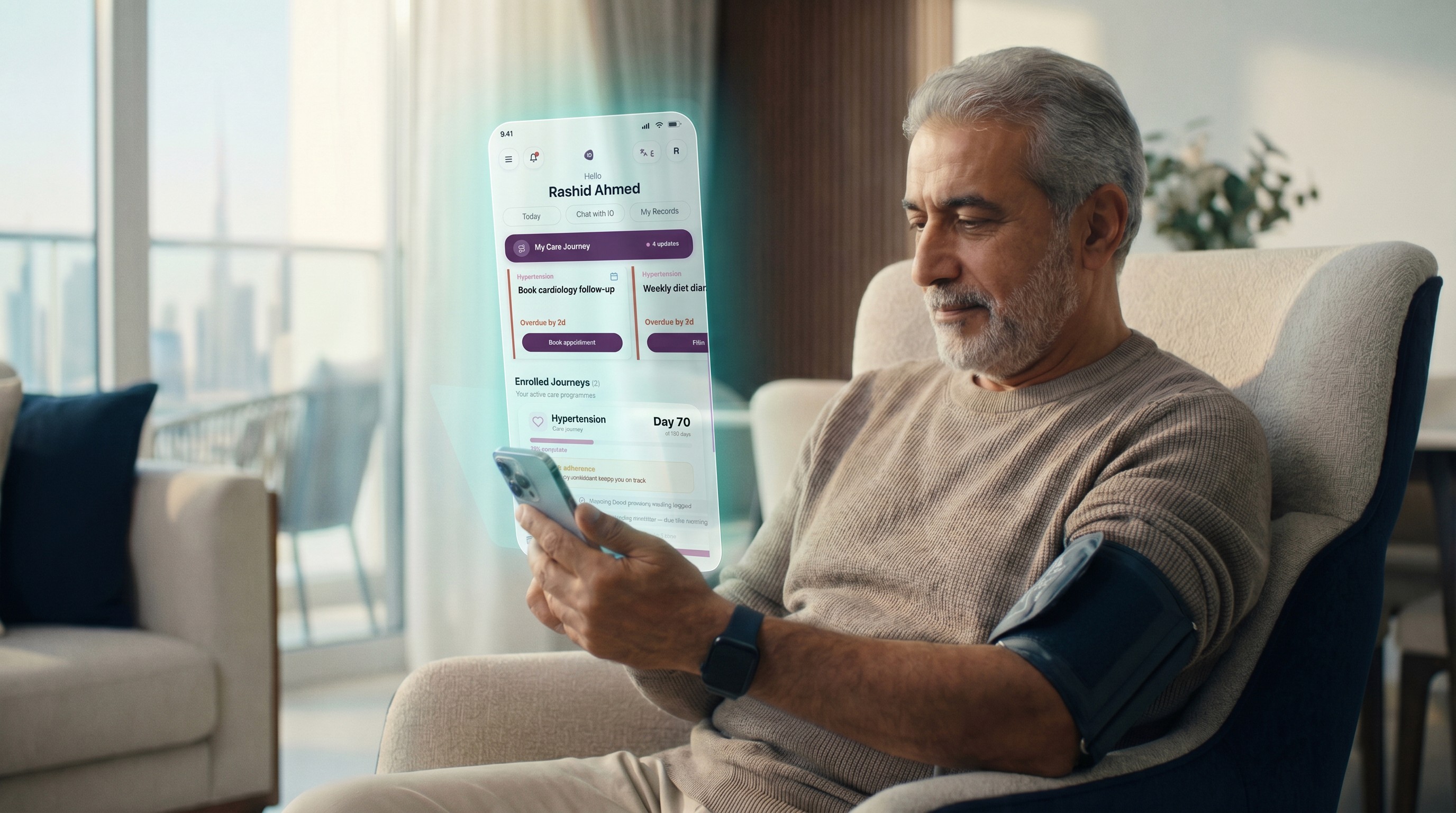
Personalized, coordinated patient journeys powered by longitudinal intelligence across every touchpoint.
PROBLEM
Most patient experience efforts stop at satisfaction surveys. Beneath those scores are fragmented touchpoints, missed outreach, and siloed data — factors that quietly drive disengagement, poor adherence, and preventable readmissions.
SOLUTION
Patient IX builds a unified longitudinal profile of each patient across encounters, channels, and care teams. It identifies friction in the journey, surfaces unmet needs, and enables proactive outreach at the right moment through the right channel, from scheduling through post-discharge follow-up.
OUTCOME
Patients who feel supported at every stage, with fewer care gaps, better adherence, and stronger long-term outcomes.
Clinical Documentation Improvement
Accurate, complete clinical documentation that reflects true complexity of care — automated at scale.

PROBLEM
Incomplete or imprecise documentation creates a cascade of downstream problems — underpayment, compliance exposure, distorted quality metrics, and gaps in care continuity. Most health systems know the problem exists; few have a scalable way to close it.
SOLUTION
Nexus CDI embeds intelligence directly into the documentation workflow, querying clinicians in context, suggesting specificity improvements, and validating diagnoses against clinical evidence and coding standards in real time. It learns continuously from coder feedback and payer patterns without adding burden to clinical staff.
OUTCOME
Documentation that accurately reflects the complexity of care delivered, with improved capture rates and reduced compliance exposure.
Care Continuity
Seamless transitions across care settings, so no patient is lost between a discharge and a follow-up.
PROBLEM
Transitions between care settings — hospital to home, specialist to primary, acute to long-term — are where outcomes most frequently deteriorate. Without coordinated handoffs, high-risk patients fall out of follow-up and readmit at preventable rates.
SOLUTION
Nexus Care Continuity monitors patients across every handoff point, identifying those at highest risk of readmission, non-adherence, or care gap accumulation. It coordinates automated outreach, aligns care plans across teams, and ensures every provider has full context on what happened last and what needs to happen next.
OUTCOME
Fewer preventable readmissions, stronger cross-team coordination, and continuity that functions as an enterprise-wide capability rather than a departmental effort.